
Feature Fellow: Barred Business
For Barred Business, repair means more than removing the barriers people face after incarceration—it means restoring dignity, building leadership, and placing decision-making power in the hands of justice-impacted people
Their newest venture, Hott Sticky Eats, brings that vision to life through a worker-owned food truck creating jobs, culinary training, and pathways to ownership for formerly incarcerated people.
Below, they share how they are putting that vision into practice within their organization, across Georgia, and beyond.
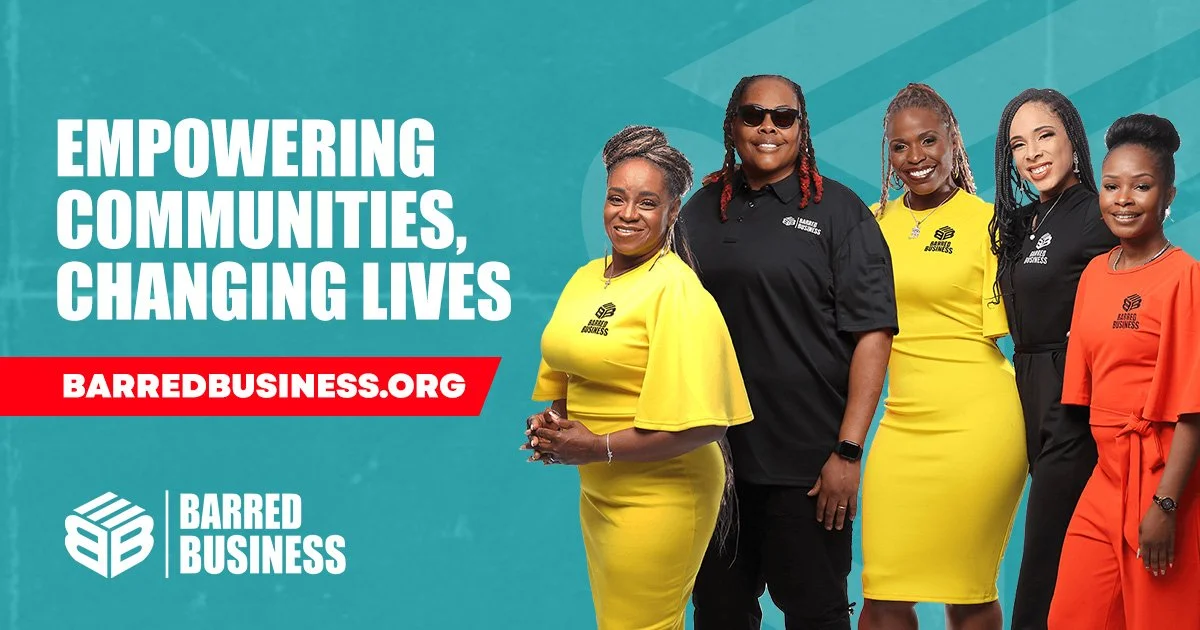
What are we working on right now?
BB: At Barred Business, we’re working to build power with and for justice-impacted people. Right now, our work spans organizing, policy advocacy, civic engagement, and leadership development, all rooted in the belief that people closest to the harm are also closest to the solutions. We’re expanding protections against discrimination for people with criminal records across Georgia, strengthening our Release the Vote civic engagement work, and investing in reentry programs that provide not just resources, but pathways to leadership. We are also helping build a national movement to recognize criminal history as a civil rights issue while creating opportunities for justice-impacted people to shape the policies that affect their lives.
Ultimately, we’re not just helping people survive after incarceration—we’re working to transform the systems that made survival so difficult in the first place.
What have you learned recently about your work, your community, or the repair ecosystem?
BB: One of the biggest lessons we’ve learned is that repair cannot happen without shifting power. For too long, systems have focused on helping people recover from harm without changing who holds decision-making power. We’ve learned that communities heal more deeply when justice-impacted people are trusted as organizers, advocates, board members, policy experts, and movement leaders, not simply recipients of services.
We’ve also learned that repair is deeply interconnected. Employment, housing, voting rights, mental health, family reunification, and belonging are not separate issues; they’re all part of what it means to restore dignity. Real repair requires us to address the whole person while changing the policies and narratives that continue to create exclusion.
How are you practicing repair within your organization?
BB: Repair begins inside our own organization. As a justice-impacted-led organization, we intentionally create spaces where lived experience is valued as expertise. We invest in healing alongside organizing because we know sustainable movements require both. We practice shared leadership, encourage honest conversations, build policies that reflect our values, and create opportunities for staff and community members to grow into leadership roles.
Our work is grounded in relationship-building, accountability, and community care. We understand that many of the people we serve have experienced profound harm from institutions, so trust must be earned every day through consistency, transparency, and compassion.
For us, repair isn’t a program, it’s the culture we’re intentionally building.
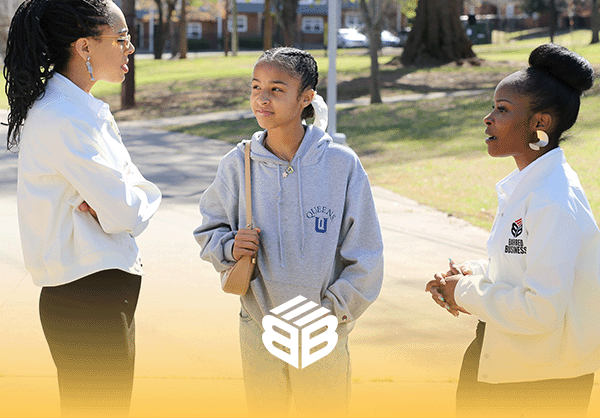
“Repair, to us, means creating systems that don’t simply reduce harm but actively restore dignity, redistribute power, and make future harm less likely.
”
— Barred Business
What future vision of repair are you seeding now?
BB: Our vision is a future where justice-impacted people are no longer defined by their convictions but recognized for their leadership, brilliance, and contributions. We’re helping build a world where criminal history is no longer used as a lifelong barrier to employment, housing, education, voting, or opportunity. We envision communities where people returning home are welcomed instead of excluded and where policy is shaped by those with lived experience.
We’re also planting seeds for a new generation of justice-impacted leaders who are influencing philanthropy, government, business, and culture. Repair, to us, means creating systems that don’t simply reduce harm but actively restore dignity, redistribute power, and make future harm less likely.
What's coming up next for your organization?
BB: The next chapter for Barred Business is about scaling our impact while remaining rooted in community. We’re expanding our protected class advocacy throughout Georgia, growing our civic engagement efforts to reach more justice-impacted voters, strengthening our leadership development pipeline, and deepening partnerships that support economic mobility and family stability.
We’re also investing in national collaborations that connect justice-impacted leaders across the country because we believe repair is bigger than any one organization. Together, we’re building an ecosystem where people with lived experience are leading movements, influencing policy, and reimagining what justice can look like.
Our hope is that the work we’re doing today won’t simply improve individual lives, it will fundamentally reshape how communities understand accountability, belonging, and freedom.
At Barred Business, we often say that people closest to the problem are closest to the solution. Repair isn’t just about fixing what was broken, it’s about trusting the people who survived the harm to lead us toward something better. That’s the future we’re building every day.